By tPanel Solution - Updated
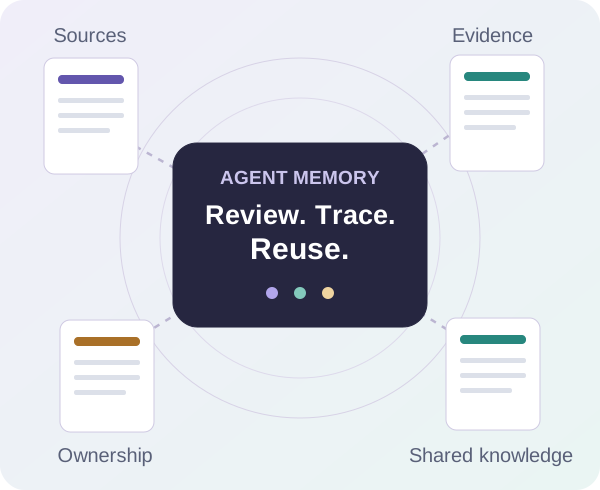
Agent Memory Governance helps enterprises decide what agents may remember, how that knowledge is reviewed, and where it can be reused. This guide covers its purpose, practical controls and a software development example.
What is Agent Memory Governance?
Agent Memory Governance is the set of policies, responsibilities and technical controls that determine what an AI agent may remember, where that memory came from, who may use or change it, and when it must be reviewed, corrected or retired. It makes persistent agent memory an accountable business resource.
Agent memory is information an application retains for use beyond the current interaction: a customer preference, a project decision, a troubleshooting lesson or a summary of previous work. Retaining that information does not necessarily train or change the underlying AI model. The application can store it separately and supply relevant entries during a later task.

Governance becomes important when those retained entries influence future work. A note that began as one person's observation can become another agent's assumed fact. The business needs a way to decide whether that transition is justified.
A practical definition for enterprises
An enterprise should be able to answer: What does the agent remember, why should we trust it, where may it apply, and how do we correct it? Microsoft's memory governance and observability guidance explicitly calls for attributed memory operations, provenance, history and propagation tracking.
Why do enterprises need agent memory governance?
Memory can reduce repeated explanations and help an agent continue unfinished work. But useful recall and justified reuse are different questions. A remembered exception may be accurate for one customer and wrong for the next. A once-correct procedure may remain retrievable after the procedure changes.
Consider an illustrative sales workflow. An account manager receives approval for a one-off discount. Their agent remembers the arrangement. Later, a shared sales agent retrieves a shortened version that omits the customer and expiry date, and recommends the discount for unrelated accounts. The problem began when a scoped exception became a general rule.


| Business pain point | What governance can change |
|---|---|
| Repeated explanations and lost handovers | Keep approved decisions and lessons available to the next authorised person or agent, with an owner and supporting context. |
| Different agents give conflicting answers | Expose the competing entries, their sources, scope and effective dates so the responsible team can resolve the disagreement. |
| Nobody can explain a recommendation | Record the memory versions supplied to the agent and link them to source evidence and the relevant run. |
| Old instructions keep returning | Retire superseded entries and track derived summaries or copies that also need correction. |
| Private context spreads across teams | Check access and intended use before retrieval, sharing and promotion into a broader knowledge scope. |
| Useful experience stays with individuals | Provide a review path that turns a local lesson into a reusable team practice without copying the entire private history. |
These are intended outcomes, not automatic results of installing a memory store. They depend on reliable integrations, clear ownership and controls that agents cannot simply bypass. A small, temporary assistant may need only limited retention and isolation; shared agents supporting ongoing business decisions need a more deliberate process.
What can an agent memory governance layer do?

Review what becomes durable memory
A conversation can produce a candidate memory without making it immediately available to every agent. A review step can accept it, restrict its scope, ask for evidence or reject it. Low-risk preferences may follow automatic rules; proposed operating procedures may require a named business reviewer.
Separate observed facts, user preferences, inferred conclusions and approved policies. An agent's inference should remain labelled as an inference until evidence or an authorised reviewer supports a stronger status.
Trace sources and transformations
Provenance records where an entry came from. Lineage records how it was derived: which conversation, document version or earlier memories contributed to a summary. Keep the distinction visible when several sources have been combined.
A source link helps an investigator inspect evidence; it does not prove the memory is true. A reviewer also needs the original scope, relevant dates and a record of what was removed or generalised during extraction.
Detect and investigate conflicts
A governance layer can flag potentially incompatible memories and present them for comparison. The decision may be to supersede an old entry, preserve a valid exception, narrow its scope or withhold it while the owner investigates. Similar wording alone is not enough to establish a contradiction.
Control access and maintain the lifecycle
Access decisions should account for the current user, agent, tenant, purpose and memory sensitivity. Expiry, correction and deletion must also reach relevant derived records and retrieval indexes. Microsoft recommends enforcing memory isolation outside the model and establishing intent and provenance before persistence in its guidance on guarding AI memory.
Governance can reduce exposure to poisoned or inappropriate memories, but approval is not a guarantee of correctness. Continue testing what the agent actually receives and how it behaves.
From individual memory to team and enterprise knowledge
A useful enterprise design gives knowledge a path beyond the individual who discovered it. This guide calls that process memory promotion: extracting a reusable lesson, validating it and approving it for a wider organisational scope. The three levels below are a proposed operating model, not a universal industry standard.
Experience becomes reusable knowledge.
Capture the experience
Decisions, experiments and lessons from the work.
Working recordValidate the practice
Approved implementation and integration knowledge.
Technical recordExplain the capability
Business purpose, usage and module relationships.
Capability recordCustomer support knowledge
Instructions and troubleshooting for an approved customer audience.
| Level | What belongs here | Before moving wider |
|---|---|---|
| Individual | Personal working preferences, local observations and task history within an authorised workspace. | Identify a reusable lesson, remove unnecessary personal or customer detail, and confirm permission to reuse the source. |
| Team | Reviewed practices that apply to a defined team, workflow or product. | Test applicability beyond the original case, check conflicts and nominate an accountable owner. |
| Enterprise | Approved knowledge intended for use across relevant business units. | Obtain the appropriate business approval, define exceptions, retain lineage and set review or expiry triggers. |
Promotion should create a reviewed derivative
Extract the knowledge that a wider audience needs, check its evidence and approve a new record for that purpose. Preserve links to its sources without automatically expanding access to them. The software development example below shows how one feature can produce several related records.
Knowledge scope and policy authority are separate
A widely shared tip is not automatically a company policy. Record whether an entry is advice, evidence or an authorised rule, and who may approve each status. Removing names is also insufficient by itself to make confidential source material safe to share.
Promotion should be reversible. If the original lesson proves incorrect, the system should identify the team and enterprise derivatives, suspend affected retrieval and send them for review. Some experience should remain local; there is no value in promoting every memory.
Example: one software feature, four useful forms of knowledge
A developer ships a bulk customer import feature for a CRM. Users upload a CSV, map columns, check errors and import valid records. This example uses fictional interfaces and behaviour, not a customer case study.
In brief: one feature produces four reviewed records. Personal memory captures the experience; team memory explains the implementation; enterprise memory explains the capability; support knowledge explains how to use it.

1. Personal memory: implementation lessons
The developer records decisions, failed experiments and unresolved issues, linking the feature ticket, code revision and tests. For example: "I used a background worker to avoid timeouts. Retrying the job must not create duplicate customers; the test is attached." Unresolved observations remain labelled and do not become approved guidance.
2. Team memory: implementation and interfaces
After code review and testing, an engineering reviewer approves a reusable technical summary. The diagram below shows the write interface and retry rule. The companion GET /customer-imports/{id} returns job status and row errors.
The record also covers required fields, encodings, duplicate matching, tenant permissions, CRM and notification integration, tests, diagnostics and known limits. It names an owner and retains links to the accepted code and source memories, so colleagues can maintain or integrate the feature.
3. Enterprise memory: purpose and module relationships
A product owner reviews the business description: bulk import moves existing contact lists into the CRM, with defined permissions and release limits. Imported customers appear in search and segmentation; the notification module reports completion. Sales, onboarding and delivery teams can explain the capability without reading API specifications.
4. Support knowledge: customer instructions
A support author draws on the approved team and enterprise records. Product or support staff check the steps against the released interface before publication. The customer version below focuses on the task, with required permissions and error guidance such as "An email address is already in your customer list." Internal diagnostics, private records and unreleased details stay out.
Bulk customer import
How it works
- Interface
POST /customer-imports
Returns a job identifier.- Processing
- A background worker validates and imports rows.
- Reliability
- Retrying a job must not create duplicate customers.
For developers and engineering agents
How to use it
- Prepare your CSV using the template.
- Upload, map columns and check errors.
- Confirm the import and check the result.
For customers and support agents
Scope and knowledge type are separate. A team can own usage instructions, and an enterprise can own technical standards. Support content is a separately approved publication, not a higher authority level or permission to expose internal memory.
Keep versions connected when the feature changes
Each record keeps its feature identifier, applicable release, owner, review status and derivation links. A change to duplicate handling triggers the linked reviews below. Superseded guidance stops appearing as current; older instructions remain available only for the releases they describe.
A feature changes. Find the knowledge it affects.
Duplicate-handling behaviour changes
Link the revised implementation to its feature and release.
Engineering owner
Review the contract and tests.
Product owner
Review the business description.
Support owner
Review steps and error guidance.
How should enterprises resolve agent memory conflicts?
A conflict is not always a choice between a true statement and a false one. Two entries may describe different customers, jurisdictions, product versions or time periods. A useful investigation compares the conditions under which each statement applies.
| Type of disagreement | Example | Appropriate response |
|---|---|---|
| Time | An old escalation contact differs from the current directory. | Verify the authoritative update, set effective dates and retire the superseded contact. |
| Scope | One customer has a special payment arrangement. | Preserve the authorised exception with its account scope rather than rewriting the general rule. |
| Authority | An informal note contradicts an approved procedure. | Escalate to the procedure owner; do not let recency or model confidence silently override policy. |
| Evidence | Two incident summaries give different root causes. | Keep both claims visible, inspect the underlying evidence and mark the conclusion unresolved until reviewed. |
Configure precedence for the business domain. "Newest wins" can discard a still-valid policy; "enterprise always wins" can erase a legitimate local exception. Where a material conflict remains unresolved, the agent should seek clarification or avoid relying on the disputed entry.

The resolution record should capture who decided, the evidence considered, the affected entries and any downstream corrections. Automated detection can help prioritise review, but its false positives and missed conflicts need evaluation.
Where does a governance platform or layer fit?
A memory governance layer can sit on the write and retrieval paths between agents and their memory stores. An enterprise agent memory platform can add the human workspace: review queues, source inspection, conflict investigation, promotion approvals and incident response.
These are architectural roles. The storage might use a database, documents or a combination of systems. The important requirement is that the relevant agents and integrations cannot bypass the controls when writing, reading or sharing memory.

A practical lifecycle to design around
- Propose: extract a candidate entry with source references and its intended scope.
- Evaluate: check sensitivity, permitted use, duplicates and possible conflicts.
- Approve: apply an explicit rule or route the candidate to the responsible reviewer.
- Retrieve: check current permissions, applicability and status before supplying it to the agent.
- Promote: create an approved derivative for a broader team or enterprise scope.
- Correct or retire: trace affected derivatives, stop inappropriate reuse and verify the change.
What a useful memory record contains
Start with an identifier and version, the claim itself, its type, source references, owner, access scope, applicable entities, effective dates and review status. Add links to derived records and the events that approved, used or superseded it. A confidence score can assist review, but should not substitute for source evidence or policy authority.
Developers need predictable APIs and failure behaviour. If the policy check is unavailable, define whether the task stops, proceeds without memory or uses a separately approved fallback. Memory access does not authorise an external action: tool permissions and transaction approvals remain separate controls.
How can an enterprise start without building a full platform?
Begin with one recurring workflow where retained context already causes friction. Support handovers, account coordination and internal troubleshooting are useful candidates to evaluate. Choose a memory class with a clear owner and a bounded audience before expanding across the business.
- Map the current memory: identify chat summaries, agent files, databases and personal notes that actually feed future tasks.
- Set the boundary: decide what may be retained, who may use it and what must stay outside memory.
- Assign responsibility: name who approves a shared entry, resolves conflicts and responds when a source changes.
- Pilot review and correction: require source links for the selected memory class and test a complete correction through to retrieval.
- Trial promotion: move a small number of validated individual lessons into team knowledge, preserving restrictions and lineage.
- Measure before expanding: compare handover effort, repeated corrections and review workload with the starting position.
Test the difficult cases
Check whether a user from another team can retrieve a restricted entry, whether an expired procedure still appears, and whether correcting a source also identifies an older summary. Introduce a deliberate conflict and confirm that the reviewer can inspect both claims. Test permission changes after a memory was created, not just initial access.
Measure usefulness as well as control
- Traceability: proportion of active entries with a usable source reference and accountable owner.
- Correction: time from identifying an error to blocking or correcting affected retrieval paths.
- Review: queue age, conflict resolution time and the amount of unnecessary review.
- Reuse: whether promoted knowledge helps complete agreed tasks without increasing repeated mistakes.
- Isolation: results of cross-user, cross-team and cross-tenant access tests.
A high approval rate is not evidence that memories are accurate. A retrieval log shows what was supplied to a model, not a complete explanation of its reasoning. Validate outcomes against representative tasks and retain human accountability for consequential decisions.
Plan for knowledge your organisation can trust
The business value of agent memory grows when useful experience can survive a handover and improve another task. Governance gives that reuse an explicit boundary: evidence, ownership, appropriate access and a way to change course when a memory is wrong.
Before considering a platform, choose one workflow and write down three things: what its agents should remember, who is responsible for that knowledge, and what evidence would justify sharing it more widely. Those decisions give future development or procurement a concrete starting point.
About this guide: Published by tPanel Solution. This is an educational guide to an enterprise design approach, not an announcement of an available tPanel memory governance product. The examples are illustrative, and the individual-to-team-to-enterprise model is a proposed framework.
Frequently asked questions
Have a question about agent memory? Use the form below to share your scenario or suggest a correction.
Is agent memory governance just a shared knowledge base?
No. A shared knowledge base is a place to make information available. Memory governance adds decisions about what may enter that resource, its source and authority, who may reuse it, and how errors or expired information are corrected. The same controls may apply across several stores.
Does every memory need human approval?
No. Review can depend on risk, scope and type. A personal formatting preference may follow an automatic rule, while an enterprise procedure needs an authorised owner. Automatic approval rules should be explicit, testable and reversible.
Can AI resolve memory conflicts automatically?
AI can identify likely disagreements and suggest resolutions. Straightforward cases may follow configured rules, but ambiguous evidence, policy exceptions and consequential decisions need an accountable reviewer. Keep the evidence and decision history even when resolution is automated.
Can personal agent memory become enterprise knowledge?
Yes, where reuse is authorised. Extract a generalisable lesson, review evidence and confidentiality, define its scope and publish a derivative with provenance. Do not copy private conversation histories into an enterprise pool or assume summarisation removes access restrictions.
Does memory governance require a new AI model?
Not necessarily. It can operate in the application and data layers around existing models. Its effectiveness depends on controlling memory access across the relevant agents and stores, and on connecting business review decisions to those controls.
Have a question about agent memory?
Share your scenario or suggest a correction to this guide. A sanitised description is enough; leave out private records and credentials.