Custom CRM development
Keep enquiries, follow-ups and sales activity together. Set up the pipeline and reporting your team needs, including lead management.
tPanel builds CRM, web and mobile systems for Australian businesses. Bring us the process your team is struggling with, and we'll help work out what to build.
100%You own the code from day oneThe full source code and the IP are yours - written into the agreement from the start, not granted at handover. No lock-in.
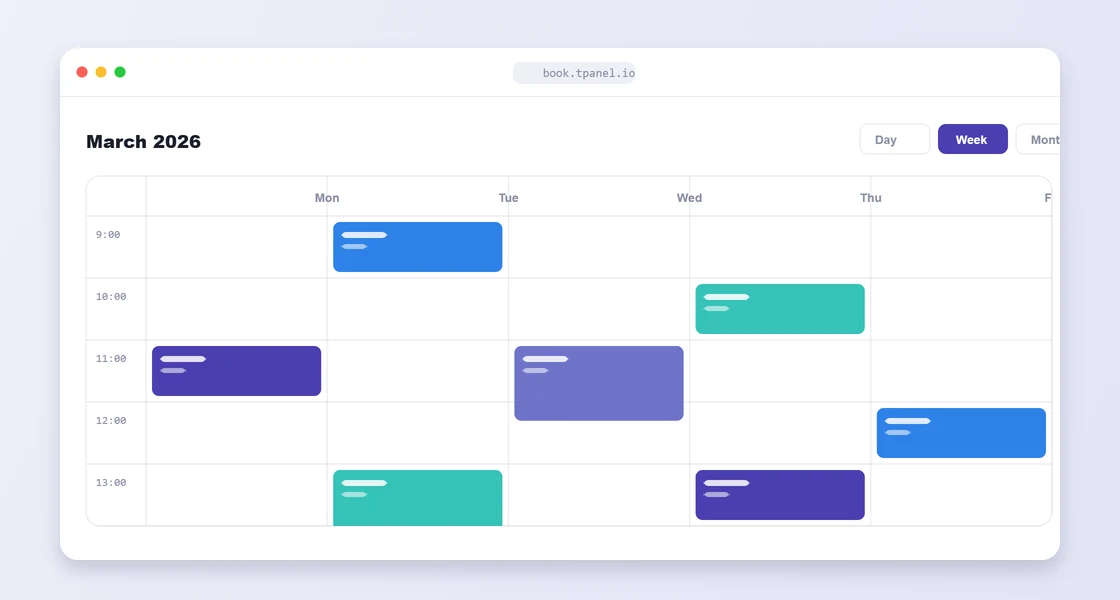
Perhaps your team enters the same information twice, tracks approvals in email, or keeps a spreadsheet beside the CRM. Custom software development gives you a system designed around those jobs.
tPanel is a Sydney-based software development company working with businesses across Australia since 2014. A project might be one missing connection or a complete business system.
A project often combines a few of these: a CRM with accounting integration, for example, or an internal system with an app for field staff.
Keep enquiries, follow-ups and sales activity together. Set up the pipeline and reporting your team needs, including lead management.
Build a product customers can subscribe to, with separate customer accounts, permissions, billing and onboarding.
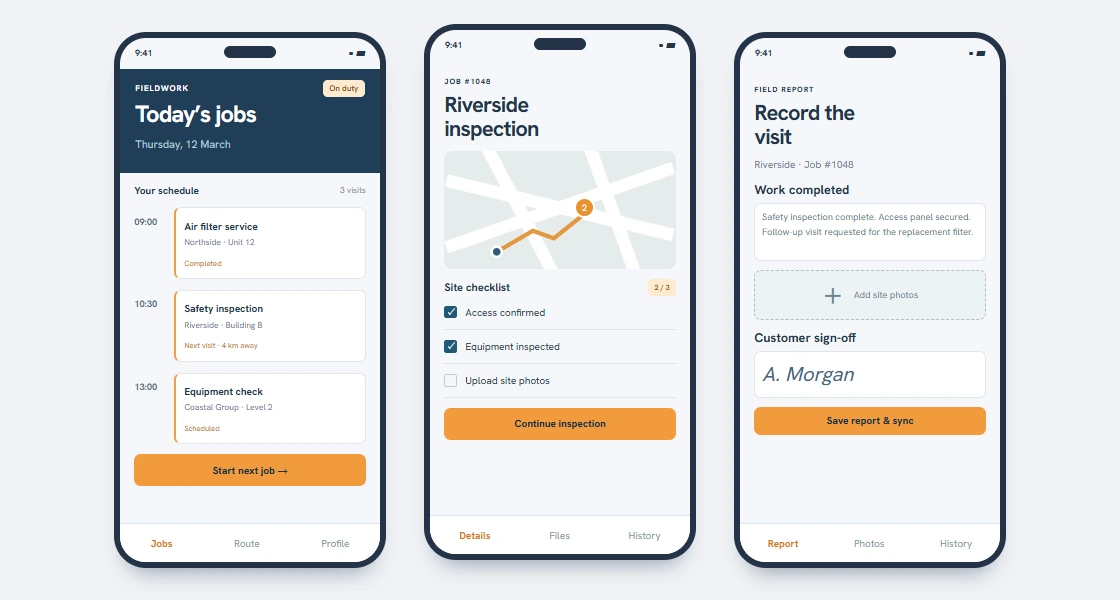
Give field staff access to jobs, photos and reports, or let customers book services and check progress from their phone.
Manage jobs, approvals, documents and workloads in one place, with access set for each role.
Connect your CRM, accounting, payments and other platforms so staff can stop copying records between them.
Automate routine steps such as routing requests and updating records. Use AI workflow automation for tasks that need text interpretation, with review where needed.
Interface concepts with fictional sample data.
Explore all custom business systems ->Two examples of systems tPanel has built and supported. These are screenshots from the client projects.
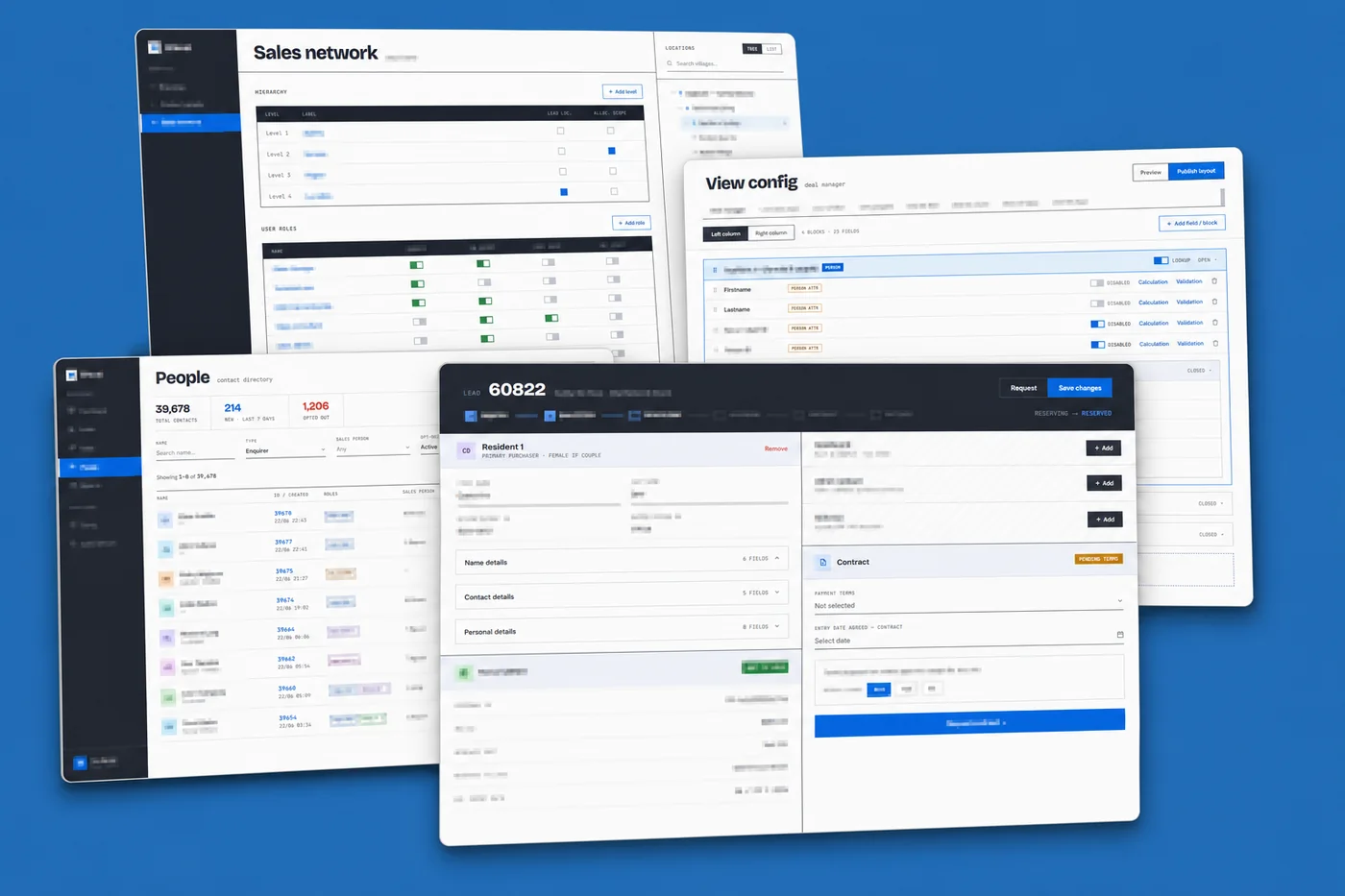
Particle's platform launched in May 2018. tPanel continues to develop and support it, including the companion mobile app rebuilt in Flutter during 2025 and 2026.
Read the Particle CRM case study ->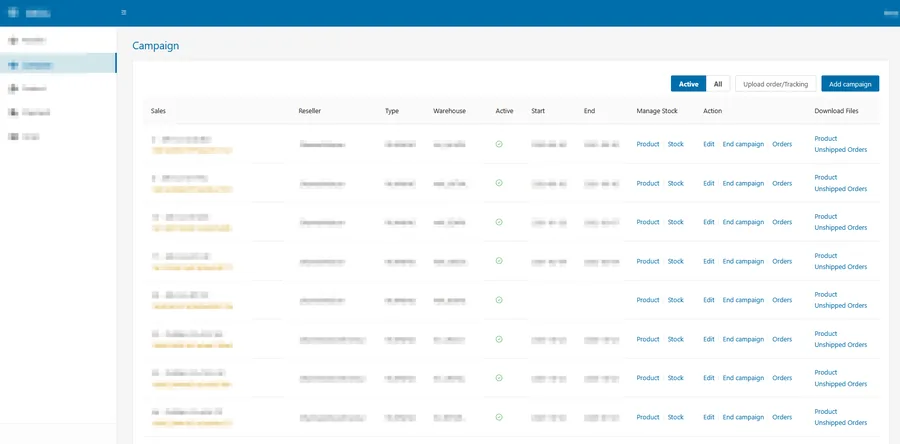
Orders from several channels now feed into a shared hub. It sends orders to warehouses and returns tracking details to the original channel.
Read the Everau/Tangwealth IMBA/Order Hub case study ->
Show us an enquiry, an order or an approval from start to finish. We look at who handles it, which tools they use and where they get stuck.
That gives us something concrete to scope, and helps you decide whether to build, connect existing tools or change the process.
Walk through the process with the people who use it.
Review a written scope, fixed price and delivery plan.
Try working versions and check them against real tasks.
Get training, documentation, source code and ongoing support.
Custom software is worth considering when an important part of your work does not fit the tools available. Compare the alternatives before committing to a build.
Try its settings and available integrations first. Check it against your actual workflow, including the exceptions.
An integration may remove the repeated data entry without replacing the systems your team knows.
Define the smallest useful version. If the process is still changing, agree how it should work before building it.
For a fuller comparison, read custom software vs off-the-shelf or the signs you need custom software.
These are tPanel's indicative project ranges in Australian dollars. The written quote sets the price for your agreed scope.
A focused automation, such as routing a request or transferring a record.
One main business function with a few integrations.
Several connected modules, planned and delivered in stages.
Managed hosting, maintenance and support for a standard scope, with no per-seat charge. Larger systems, complex architectures or numerous service dependencies may cost more. We review the setup and agree the scope and price first. Third-party charges and new development are separate.
Compare the full cost of each option, including setup, migration, subscriptions and maintenance. Read the custom software cost guide ->
Ask about scope, ownership and support before choosing a developer. Those details affect the project long after launch.
tPanel is a small studio. The person who scopes your project also builds it. If you need a large team to start immediately, a bigger supplier may be a better fit.
Meet Tim Wang ->Get a written scope, exclusions and a process for agreeing changes.
Confirm source code, IP and access in the agreement. With tPanel, you own the code and IP from day one.
Check the fee, coverage and contact person. tPanel offers ongoing maintenance by the developer who built the system.
A proposal should explain which existing tools can stay and why a new build is needed.
Feedback from the managing director and CTO of Particle Sales Accelerator.
We've worked with tPanel for more than ten years, starting with the development of a sales CRM and continuing to evolve it ever since. During that time, the team has delivered major product builds, integrations, automations and companion applications, tackling complex technical challenges with professionalism and expertise. They have always been responsive, accountable and easy to work with. tPanel consistently delivers high-performing, reliable and secure solutions, making them a trusted long-term partner.
The tPanel team deliver quality software at a reasonable price, providing real value. They support what they build, which is the element that makes the solution a success. The level of skill and ability to manage complex cloud environments and complex APIs is high. The team is very much aware of how to build secure platforms that protect client information from unauthorised access. The commitment to prompt problem resolution is very high. I would recommend tPanel.
Discovery and reviews can run over screen share. For Sydney projects, in-person sessions can help when the workflow includes a warehouse, workshop or front desk.
tPanel works with businesses in Melbourne, Brisbane, Perth, Adelaide and regional Australia, with meeting times agreed around your team.
Agree the cloud provider, hosting region and access requirements during scoping. Australian hosting regions are an option when required.
An NDA can be in place before you share detailed business information. Read our privacy policy for how tPanel handles personal information.
Send through any certification or procurement requirements early so we can confirm what tPanel can meet.
A few practical answers about starting a project.
It designs and builds software for a particular business process. tPanel's work includes scoping, design, development, integrations, testing, launch and support.
tPanel's indicative build ranges are A$3,000-6,000 for a focused automation, A$12,000-45,000 for a business system, and A$50,000 or more for a larger platform. Managed hosting, maintenance and support is A$1,000 + GST per month for a standard scope. Larger systems, complex architectures or numerous service dependencies may need a higher monthly fee. We assess the system and agree the scope and price with you first.
A single workflow automation usually takes 2-4 weeks. A focused business system typically takes 6-12 weeks. Larger platforms are delivered in stages. The schedule depends on the scope, integrations and availability of people to review and test the work.
Yes. tPanel works remotely with businesses across Australia. We use screen sharing for discovery, working demonstrations for reviews, and agreed meeting times for the people involved.
Start by checking whether an existing product can handle your workflow. Configuration or an integration may be enough. Consider custom development when important requirements remain unmet, and compare the full costs before deciding.
Yes. We first review the existing code, hosting, documentation and known issues. That review helps us recommend whether to maintain, extend or replace parts of the system.
You own the source code and IP from day one. Ownership is written into the agreement. Third-party services and software used in the project have their own terms.
Based in Sydney, tPanel provides custom software development for clients in Melbourne and across Australia.
Use email and Microsoft Teams to map the workflow, discuss scope and review the build in stages, with meetings agreed around your time zone.
Tell us how the process works today, where it gets stuck and what you would like to change. We can discuss the options in a free first conversation.