Improve the current CRM
When the tools are there, but the setup is wrong.
Review fields, stages, permissions and automations first. Staff may need a simpler process or clearer training rather than a new platform.
Keep customer history, lead ownership and the next follow-up in one place.
100%You own the code from day oneThe full source code and the IP are yours — written into the agreement from the start, not granted at handover. No lock-in.
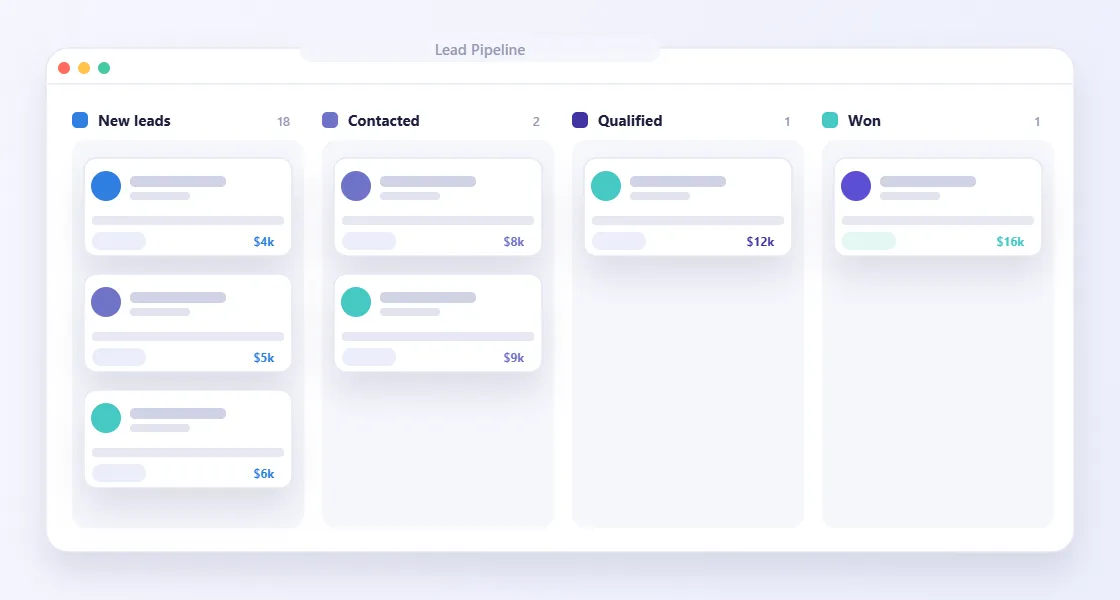
tPanel builds custom CRM systems for Australian businesses whose sales process needs more than their current setup provides. We define the customer records, lead assignment and follow-up, reporting and integrations together, so staff can work from the same information.
The first decision is whether to improve your existing CRM, connect a separate workflow to it, or replace it. A custom build is worth considering when important gaps remain after checking what the current product can support.
The Particle Sales CRM case study shows a delivered web platform and mobile app, with client-approved screenshots and an explanation of how each customer organisation’s data is kept separate.
Before replacing your CRM, check whether its settings or an integration can solve the problem. The right choice depends on where the current workflow breaks down.
When the tools are there, but the setup is wrong.
Review fields, stages, permissions and automations first. Staff may need a simpler process or clearer training rather than a new platform.
When the CRM works, but one part of the job sits elsewhere.
Keep the main customer record where it is. Build the missing workflow and agree which system owns each field, how updates sync and how failures are handled.
When important requirements still cannot be met practically.
Design the records and workflow around your team. Allow for data migration, testing, hosting and future changes as well as the initial build.
These are useful starting points for a review. They do not, by themselves, mean you need a new CRM.
Staff keep their own notes because the CRM gets in the way.
Leads sit between teams or follow-up depends on memory.
Managers combine spreadsheets before they can trust the pipeline.
Emails, documents and the last conversation are in different places.
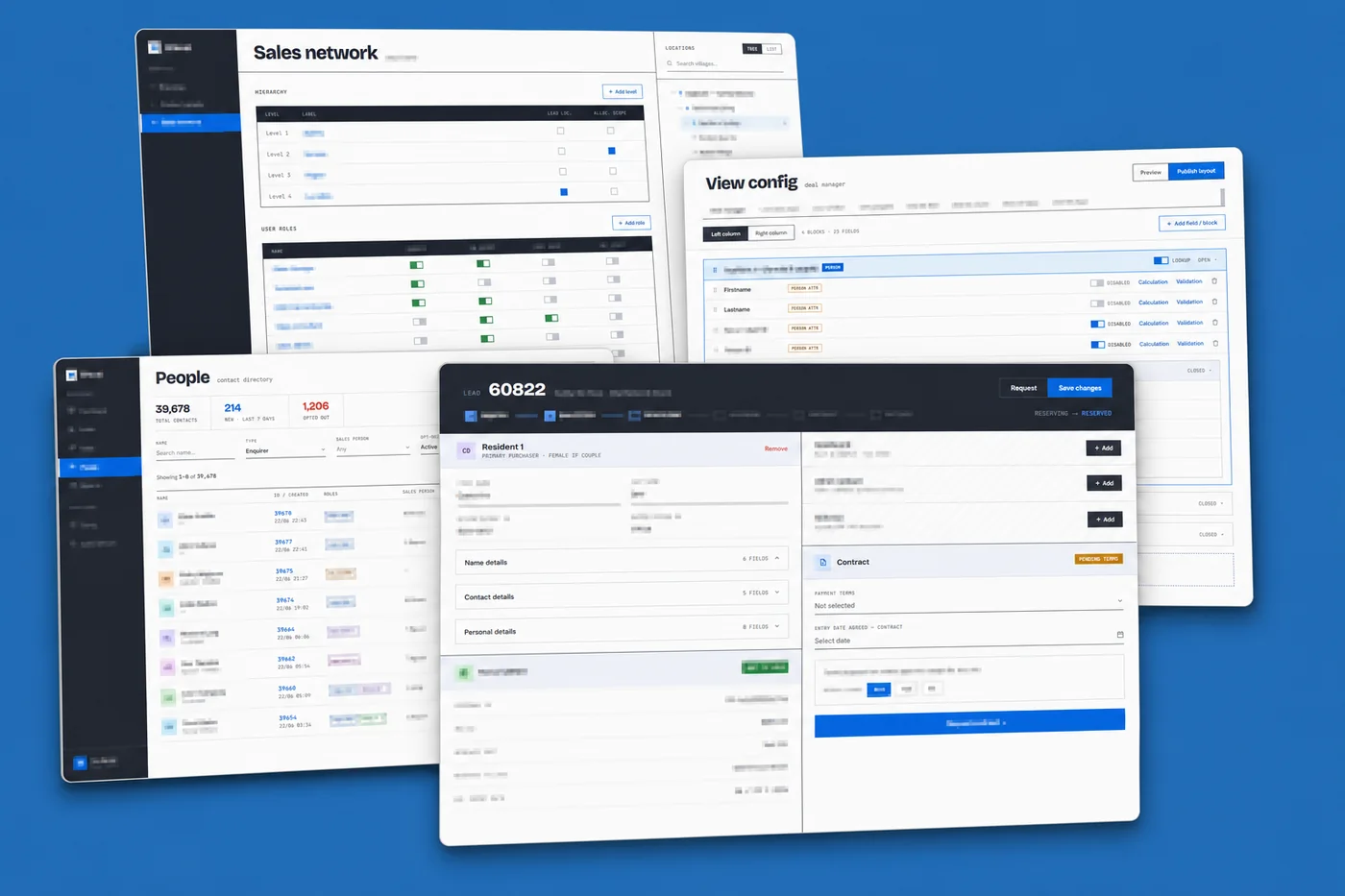
The Particle platform brings lead records, follow-up rules and reporting into a web CRM, with a companion app for consultants away from the office. Each customer organisation has its own database.
Consultants can record a conversation and schedule the next contact. Managers can review the activity across offices.
Shared with the client’s permission. Identifying information has been obscured.
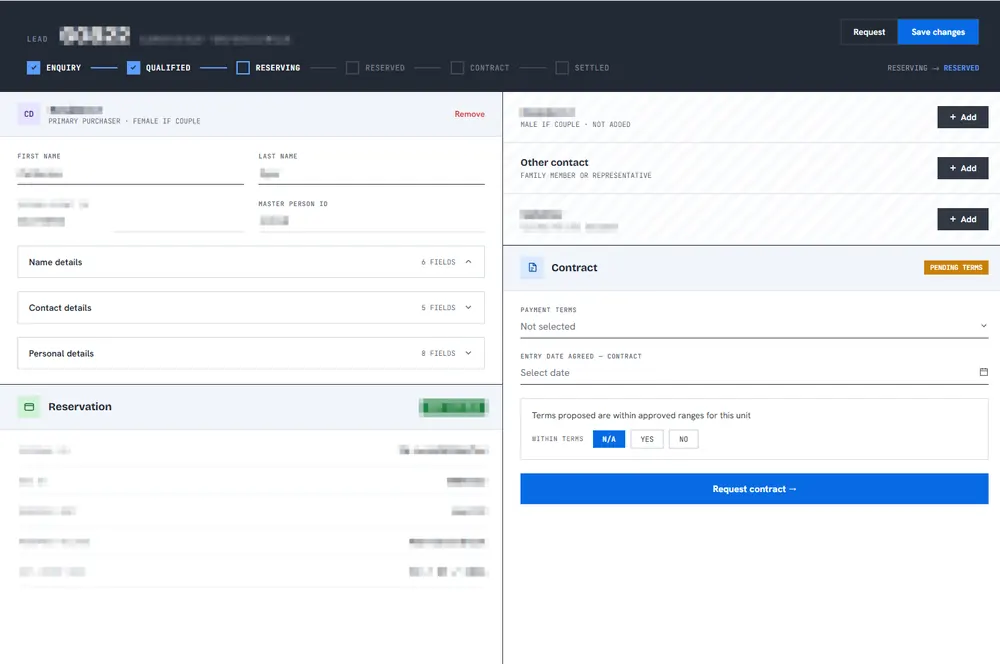
Choose modules to support the agreed workflow. Each needs its own rules, permissions and acceptance checks; adding a module changes the scope.
Keep customer details, source, notes, files and conversation history together. Agree who can view and update each part.
Use stages your team recognises. Define the required fields and what should happen when a record moves between stages.
Give each next action an owner and a due date. Set reminders and decide when overdue work should be escalated.
Define what salespeople, managers and administrators can see and change, including records shared between offices.
Build the views managers use to make decisions: open work, pipeline value, follow-up activity and recorded lost reasons.
Connect the agreed forms, email, calendars, finance tools or APIs. Check access, data ownership and failure handling before committing to a sync.
If your sales team needs CRM access away from the desk, tPanel can also build a mobile CRM app.
Interface concepts with fictional sample data.
For example, a small sales team might start with one enquiry-to-follow-up workflow. This is an illustrative scope to discuss, not a package included in every quote.
Salespeople see assigned records. A manager can reassign work and review activity. An administrator manages agreed settings.
Contact details, lead source, owner, sales stage, conversation notes and a next-action date. Agree what happens when an owner is away or a lead changes hands.
A view of open opportunities and overdue follow-ups. Define how each figure is calculated before building more dashboards.
A separate mobile app, complex quoting, AI features, historical data cleanup and extra integrations need their own scope decisions. They are not automatically included.
Before launch, test a complete enquiry, a handover, an overdue follow-up and the manager’s report with representative records.
A CRM only works if the team uses it.
We work through everyday tasks with the people who will use the CRM: entering an enquiry, finding the last conversation, handing over a lead and recording an outcome. Those tasks guide the screens and the acceptance checks.

Migration is part of the scope discussion. Before switching systems, agree what needs to move, what should stay and how the team will check the result.
List contacts, companies, open opportunities, notes and attachments. Check what can be exported and decide how to handle duplicates, old stages and records without an owner.
Map the fields and try a representative set of records. Check customer history, links between records, permissions and reports before agreeing to the full import.
Define when the old system stops accepting updates, who checks the final import and what happens if a critical issue appears. Include user handover and ongoing support in the plan.
If the existing CRM remains in use, agree which system owns each field and how updates should sync.
We agree the first workflow, the data it needs and how users will check it before launch. That gives the team a defined first release and a basis for deciding what to add later.
We map how leads arrive, how they are qualified, who follows up, what stages matter and where opportunities currently get lost.
The scope records the fields, stages, permissions, reports and integrations in the first release. It also identifies what stays in your current systems and which records need to move.
We build and connect the agreed workflow, test it with representative records and work through it with your users. Migration and handover are planned before the team switches over.
A boutique consulting firm used four sales stages: enquiry, discovery call, proposal and negotiation. Its HubSpot setup did not match that workflow, and salespeople kept records in a shared spreadsheet. Managers had to reconcile the two before reviewing the pipeline.
tPanel built a custom CRM with exactly four pipeline stages. Each stage shows only the fields relevant at that point in the sale. Follow-up reminders are assigned automatically when a lead moves to the next stage. Proposal documents are stored directly against the contact record. The director receives a weekly email digest showing pipeline value broken down by stage and consultant.
Sales stages, follow-up tasks and proposal documents now sit in the same CRM. The director can review the pipeline by stage and consultant without first combining separate spreadsheets.
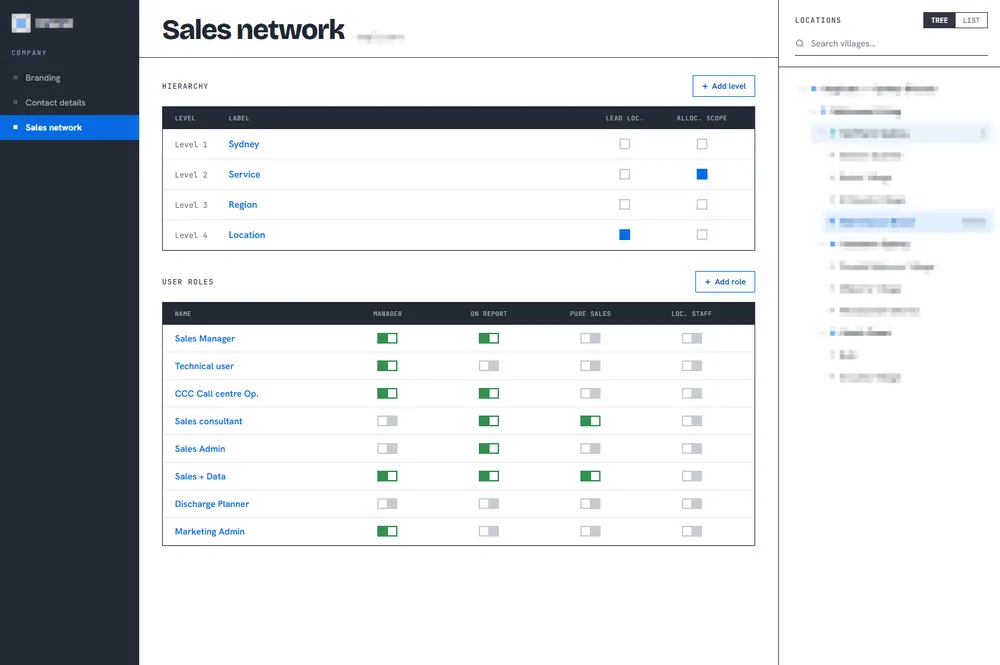
Lead routing and permissions from the same class of build — leads assigned by office and role across a multi-level sales network.
A services business with sales teams across several offices was running on a standard CRM that never quite fit. Leads from different channels had to be matched to the right local office, assigned around who was actually working that day, and followed up on a set schedule — none of which the off-the-shelf CRM handled the way the business worked. Reps tracked the gaps in spreadsheets and memory, and managers could not see a reliable picture.
tPanel built a custom CRM shaped around that exact workflow. Every enquiry is recorded and routed to the office covering the customer's location, assigned to an available salesperson by a fair-allocation rule, and pushed to that rep by SMS. A companion mobile app lets reps call and update the lead on the spot, and a fixed follow-up cadence prompts the first call and each callback. Crucially, the custom CRM does not replace the company's main CRM — every record syncs to HubSpot or Salesforce, which stays the system of record.
The custom workflow handles allocation and follow-up tasks while HubSpot or Salesforce remains the main customer record. Staff can update leads on their phones, and managers can review assignment and activity in the system.
tPanel uses A$12,000–45,000 as a planning range for a mid-size custom CRM. It is not a fixed quote. Multiple workflows, a separate mobile app or complex integrations can take a project beyond this range. All amounts below exclude GST.
Illustrative build budget
ex GST · one-off build
The quote depends on the agreed workflow, records, roles, reports and integrations. Confirm migration and training separately so the budget covers the switch, not just the software.
See how to plan a software budget →Optional managed hosting & support
ex GST · optional
Our standard plan includes managed hosting and SSL, monitoring, daily database backups with 30-day retention, routine updates, security patches, local support and emergency response for critical issues.
Larger systems, complex architecture or many service dependencies may need a different price. Priority scheduling for future enhancements is included; the development work is quoted separately.
View the managed software plan →You can host and maintain the CRM yourself or use another provider. The managed plan is optional.
tPanel does not charge per-seat licence fees for the custom CRM. Hosting capacity, paid APIs, third-party licences and future development still need a budget.
Short excerpts from Scott and Bryn’s feedback on our long-term work with Particle Sales Accelerator.
They have always been responsive, accountable and easy to work with.
They support what they build, which is the element that makes the solution a success.
The questions procurement and IT managers ask before a first meeting, answered up front.
Systems are deployed on the major cloud providers — AWS, Google Cloud or Azure — and the region is chosen to suit you, including Australian regions when data needs to stay onshore. If you already have a provider or your own infrastructure, we deploy there instead.
We are happy to sign one. It can go alongside the service agreement, or earlier if you would rather have it in place before the first detailed conversation.
tPanel Pty Ltd (ABN 40 167 463 854, ACN 167 463 854) handles personal information in accordance with the Privacy Act 1988 (Cth) and the Australian Privacy Principles — see the privacy policy.
tPanel is an Australian company with a registered ABN and ACN, not an offshore contractor arrangement — the details above are on the public register.
If your procurement process requires specific certifications or supplier checks, raise it early and we will tell you straight what we do and do not hold, rather than after you have invested time in a scope.
Tell us which part of your current CRM process is causing trouble.
A custom CRM is useful when standard CRM tools do not match your workflow, create too much manual work, or fail to give managers reliable visibility. For a full comparison, read custom CRM vs off-the-shelf CRM.
Yes, in some cases. A custom CRM can replace generic platforms when your needs are focused, workflow-specific and better served by a tailored system.
Yes. tPanel can connect a custom CRM with website forms, email, calendars, accounting tools, payment platforms, marketing systems and other APIs.
Yes. Many CRM projects start with lead tracking, follow-up reminders and pipeline visibility, then expand into automation, dashboards and AI features.
A focused CRM may take around 4–6 weeks; a broader build with dashboards, integrations and mobile access may take 10–14 weeks or more. These are planning estimates. We agree a schedule after reviewing the scope, data readiness, integration access and user testing.
A custom CRM has an upfront build cost and tPanel does not charge per-seat licence fees for it. Whether it is cheaper than HubSpot or Salesforce depends on team size, required features, migration and ongoing costs. Include maintenance, hosting, integrations and future changes in the comparison; there is no standard payback period.
Yes. Further stages, roles, reports or integrations can be scoped after launch. Changes still need design and testing, especially when they affect existing records or connected systems.
tPanel’s planning range for a mid-size CRM is A$12,000–45,000, excluding GST. It is not a fixed quote or a cap. The workflow, roles, integrations, reports and migration determine the scope; a larger project may cost more. We confirm the scope and quote before starting.
No. You can host and maintain the software yourself or use another provider. tPanel’s optional standard managed hosting, maintenance and support plan is A$1,000 per month, excluding GST. Larger or more complex systems may need a different price. New development is quoted separately.
Start with the workflow your team needs to complete. We use it to define the first release, migration and acceptance checks.
The Particle case study shows delivered CRM workflows and access controls. Use our CRM planning range and optional support plan to prepare a budget; the quote and schedule follow the agreed scope.
Tell us which CRM you use, where the process gets stuck and what a first release needs to do. We can then discuss configuration, integration or a custom build.