How to hire a PHP
or Laravel developer
Where to look, which hiring model fits, and what to check before handing over a business application.
Where can you find a PHP or Laravel developer?
Start with the work you need done. For a defined PHP task, a freelance marketplace can help you find individual contractors. For a Laravel project, you can also use the official Laravel partner directory or contact development companies with relevant case studies. For a permanent role, use a recruitment channel and assess the candidate against the responsibilities of that role.
The important distinction is who will own the outcome. Buying a few hours of coding, hiring an employee and commissioning a working application involve different responsibilities for requirements, testing, deployment and support.
| Route | Where to start | What to check |
|---|---|---|
| Freelancer | Upwork's PHP directory or Freelancer's Laravel directory. | Relevant work, availability, review process and handover. |
| Laravel agency | The official Laravel partner directory and companies with public Laravel projects. | Who will do the work, delivery scope, project evidence and ongoing responsibility. |
| Employee | Recruitment channels such as SEEK and your professional network. | Role expectations, technical assessment, onboarding and internal management. |
These are places to start a shortlist, not endorsements of individual suppliers. Verify current profiles and references. A directory entry is one signal; it does not replace checking fit for your application.
Freelancer, employee or development company?
- A bounded task
- A freelancer can fit a clear task when you can supply requirements and review the result. Agree who deploys it and who helps after delivery.
- A continuing internal role
- An employee can fit a sustained product roadmap when your business can manage priorities, onboarding and engineering responsibilities.
- A delivered project
- A development company can fit work that needs coordinated discovery, implementation, testing and handover. Check which of those responsibilities the quote includes.
No model automatically guarantees quality or continuity. Ask who covers absence, where documentation lives and how another developer would take over. For a business-critical application, those answers matter alongside coding skill.
Do you need PHP experience or Laravel experience?
PHP is the programming language; Laravel is a framework built with it. If your application already uses Laravel, ask candidates to explain a Laravel project they have actually delivered or maintained, including its dependencies, data model and release process.
For a WordPress site, relevant theme and plugin experience may matter more than a Laravel portfolio. For an older custom PHP system, ask how the developer would understand its structure and business rules before suggesting a rewrite.
- New build: ask for comparable workflows, permissions and integrations.
- Existing Laravel application: ask how they investigate unfamiliar code and protect critical workflows during changes.
- Version upgrade: ask how they choose a compatible target, test dependencies and prepare a rollback plan.
- API work: ask what happens when an external service rejects an update or sends the same event twice.
Ask to see the application behind the claim
A useful case study explains the client's workflow, the developer's role, the software delivered and how it was supported. A technology logo or a long list of frameworks tells you much less.
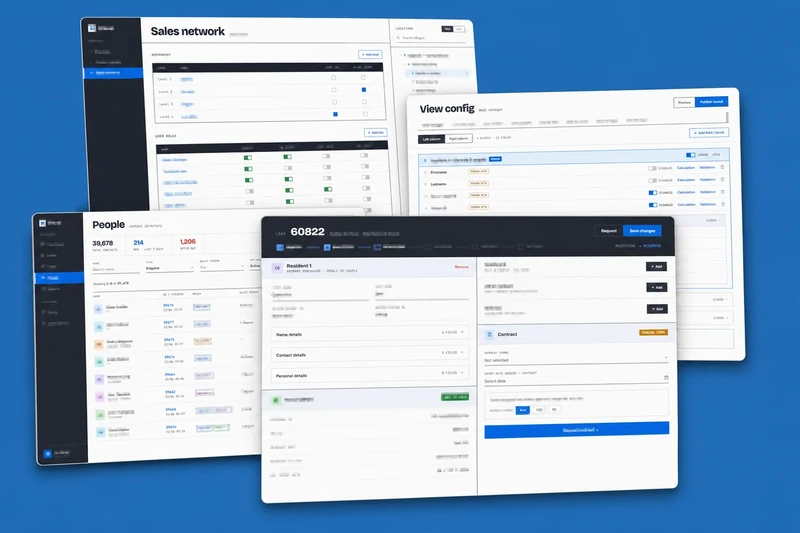
For example, tPanel's Particle case study describes a Laravel CRM's tenant separation, lead routing, mobile integration and backend update. Everau/Tangwealth's case study explains its PHP and Laravel IMBA/Order Hub system and wholesale workflow.
Ask any supplier what they personally delivered, what the client can confirm and whether the example resembles your requirements.
Questions to ask before you agree the work
Who will scope, build, test and deploy the application?
Ask for named responsibilities rather than assuming one quoted development fee covers everything. Identify who reviews work, accepts changes and coordinates any external providers.
What do we receive at handover?
Agree repository access, source code and IP ownership, deployment instructions, account ownership and documentation. List third-party licences and recurring subscriptions separately.
How will you work on our existing system?
A credible proposal should explain the initial review, a separate environment for changes, tests for the workflows that matter and how production access will be managed. Ask what cannot be estimated until the review is complete.
How will we compare quotes?
Give suppliers the same brief and compare included deliverables, assumptions, exclusions, testing, migration, support and tax treatment. A lower hourly rate does not establish a lower total project cost.
What happens after launch?
Agree the defect reporting process and distinguish maintenance from new development. Confirm support hours, escalation, responsibilities and recurring costs in the proposal.
Can we talk to a relevant client?
Ask whether a reference is available for similar work. Respect client confidentiality; if a live demonstration is not possible, discuss an anonymised walkthrough and the supplier's specific responsibilities.
Compare proposals against the same workflow
Give each shortlisted developer one representative task and ask them to explain delivery and acceptance. For example: a wholesale buyer places an order, staff approve it, and the warehouse receives it. This is a discussion prompt, not a request for unpaid implementation.
| Ask about | A useful answer covers | Clarify before signing |
|---|---|---|
| Access rules | Which products and prices the buyer may see, and who can approve an order. | How permissions will be tested, including access to another customer's records. |
| Integration failures | What happens if the warehouse API is unavailable or receives the same order twice. | Retry behaviour, duplicate prevention and how staff find and resolve failed updates. |
| Acceptance | A demonstration of the complete workflow with agreed test data. | Who signs off, which failure cases are included and what counts as a defect. |
| Ownership and support | Repository and account ownership, release documentation and post-launch responsibilities. | Recurring fees, exclusions and the handover process if you change developers. |
You do not need to judge framework syntax to compare these answers. Look for specific decisions, understandable trade-offs and a clear account of what is included. For an existing application, use a real fault or planned change as the example and read our initial application review checklist.
Prepare a brief that can produce a useful quote
- Outcome: describe the task a user should be able to complete.
- Current system: list the application, hosting and known PHP or Laravel version.
- Scope: name the user groups, screens, data and integrations involved.
- Examples: provide a sanitised workflow or a reproducible fault, without passwords or customer records.
- Constraints: state the deadline, budget range and any release or access limits.
- Acceptance: describe how you will know the work is ready.
If the scope is uncertain, ask for a defined assessment first: its fee, outputs and the decision it should enable. For budgeting context, read our custom software cost guide. Ask suppliers to separate development, initial assessment, migration, hosting, third-party fees, ongoing support and GST so you can compare the total scope.
When tPanel may fit
tPanel is a Sydney-based development business working with Australian clients on custom software, CRM, portals and integrations. Owner and full-stack developer Tim Wang stays hands-on with scoping, development and maintenance.
For a new application, see PHP and Laravel development. For an application that already exists, see Laravel maintenance, support and upgrades.
Published by tPanel Solution - 21 September 2026. This guide reflects a development supplier's perspective; compare alternative hiring models against your own needs.
Looking for a development partner?
tPanel develops and maintains PHP and Laravel business applications. Tell us what you need delivered and we will discuss whether the project fits.
Working with us from another city? See how we communicate, arrange on-site visits and quote projects.